AI Influencer Marketing: The Complete Brand Partnership Guide
AI influencers are revolutionizing brand marketing. Learn how to leverage virtual creators for campaigns that captivate audiences and drive results.
The influencer marketing industry has undergone a remarkable transformation with the emergence of AI-generated influencers. What began as a novelty has evolved into a legitimate and increasingly popular marketing channel, with brands across industries discovering the unique advantages of partnering with virtual creators.
This comprehensive guide explores the state of AI influencer marketing, the strategic considerations for brands, and best practices for creating campaigns that resonate with today's sophisticated audiences.
The Current Landscape of AI Influencer Marketing
AI influencers have moved beyond experimental curiosity to become established figures in the influencer ecosystem. Major brands including luxury fashion houses, automotive companies, and technology giants have incorporated virtual influencers into their marketing strategies, often alongside traditional human influencers.
Market Statistics and Growth
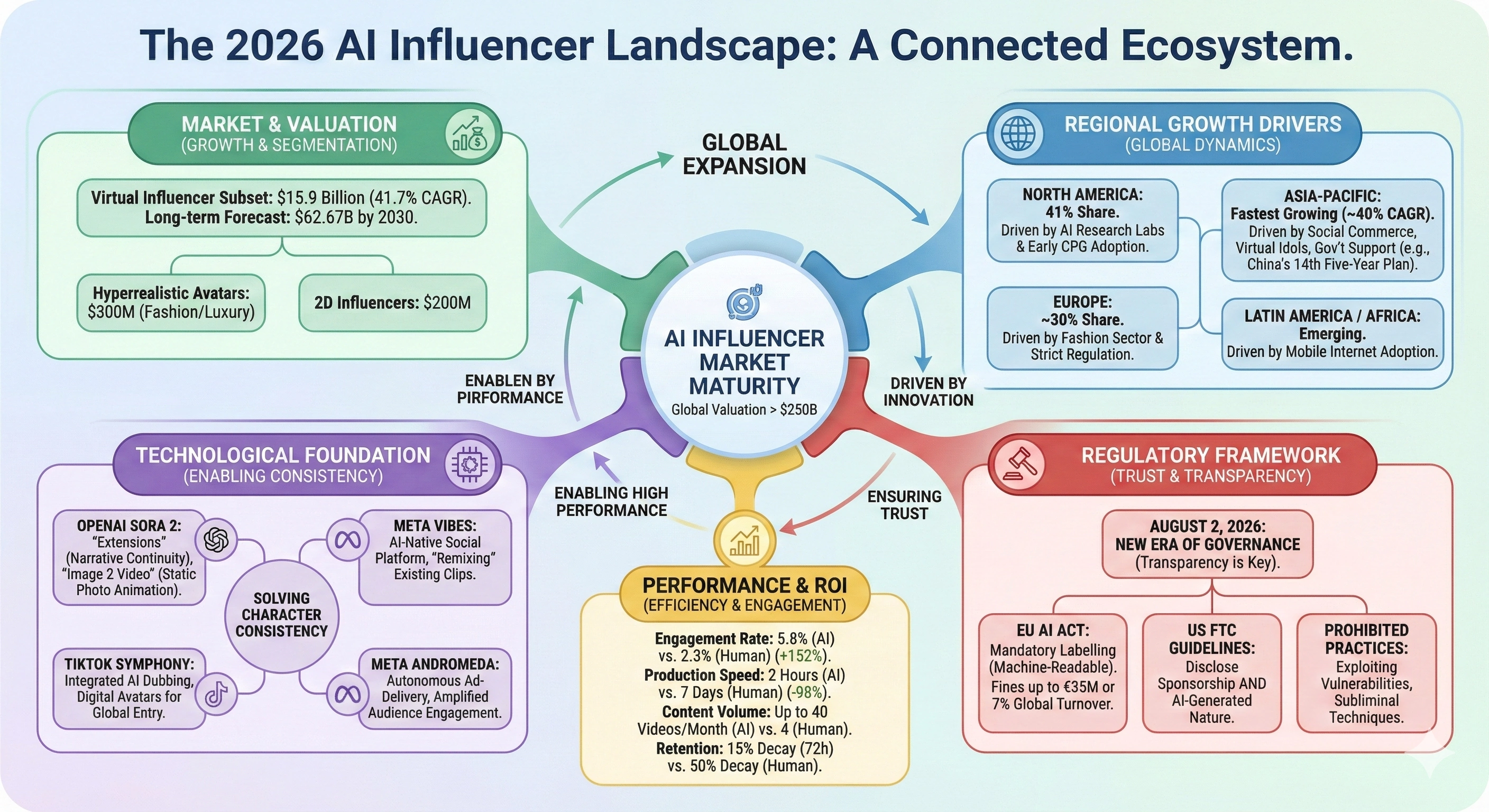
The AI influencer market has experienced explosive growth:
- Virtual influencer marketing spend exceeded $5 billion globally in 2024
- Over 200 AI influencers now have followings exceeding 100,000
- Brand collaboration rates for top AI influencers rival those of mid-tier human influencers
- Engagement rates for AI influencer content often exceed human influencer averages
This growth reflects both supply-side advancement (better AI technology) and demand-side recognition (brand acceptance of virtual influencers).
Notable Success Stories
Lil Miquela: Perhaps the most famous AI influencer, with over 3 million Instagram followers and partnerships with brands including Calvin Klein, Prada, and Samsung. Her campaigns have generated significant earned media and demonstrated the commercial viability of AI influencers.
Imma: A Japanese virtual model who has collaborated with IKEA, Porsche, and various fashion brands. Her distinctively pink-haired aesthetic has made her instantly recognizable.
PlayBella Creators: Our family of AI creators has partnered with brands seeking sophisticated, provocative, and visually stunning content that pushes creative boundaries.
Why Brands Are Embracing AI Influencers
The appeal of AI influencers to brands extends beyond novelty. Several strategic advantages make them attractive marketing partners.
Complete Creative Control
Unlike human influencers, AI influencers offer brands complete control over:
- Visual presentation and styling
- Messaging and brand voice alignment
- Content timing and frequency
- Environment and setting choices
- Consistency across campaigns
This control reduces risk and ensures brand guidelines are maintained precisely.
No Personal Risk
Human influencers carry inherent risks—personal scandals, controversial opinions, or behavior changes can negatively impact associated brands. AI influencers eliminate this variability, offering consistent, brand-safe personas that never generate negative headlines.
Scalability and Availability
AI influencers are available 24/7 and can theoretically produce unlimited content. They don't require travel, don't have scheduling conflicts, and can be "present" in multiple locations or campaigns simultaneously.
Innovation and Differentiation
Partnering with AI influencers signals innovation and forward-thinking. For brands seeking to position themselves as cutting-edge, AI influencer partnerships provide powerful differentiation from competitors using traditional marketing approaches.
Cost Efficiency at Scale
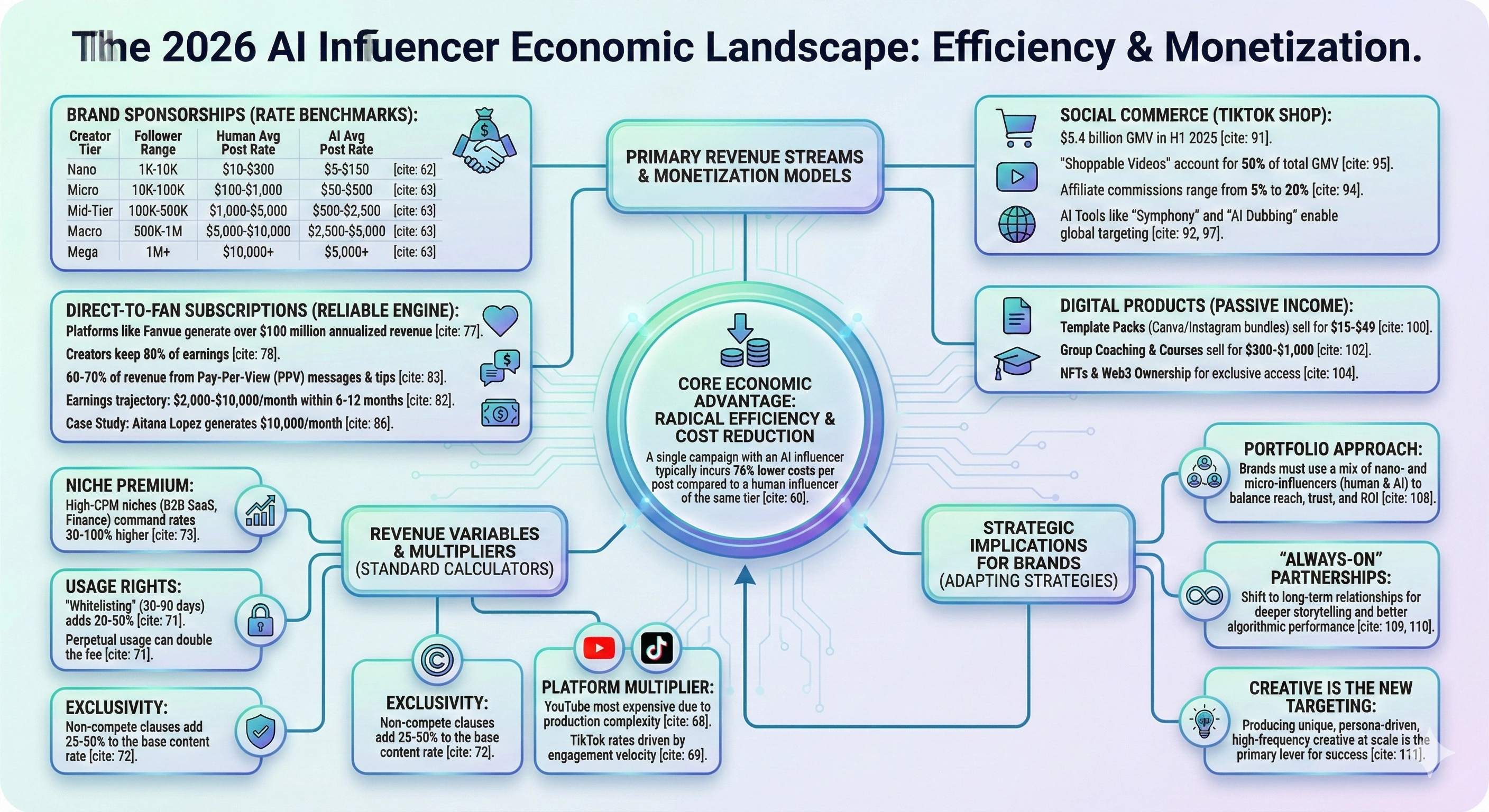
While top AI influencers command premium rates, the economics often favor AI partnerships for high-volume campaigns. The cost of producing multiple pieces of content with an AI influencer can be significantly lower than equivalent human influencer production.
Strategic Considerations for Brands
Successfully integrating AI influencers into marketing strategy requires careful planning and clear objectives.
Audience Alignment
Not all audiences are equally receptive to AI influencers. Key considerations include:
Generational Factors: Younger audiences (Gen Z and younger Millennials) tend to be more comfortable with and interested in AI influencers. They've grown up in a digital-native environment where the distinction between "real" and "virtual" feels less absolute.
Category Relevance: Some product categories align more naturally with AI influencers. Technology, fashion, beauty, and gaming audiences tend to be most receptive. More traditional categories may require more creative approaches.
Cultural Context: Acceptance of AI influencers varies by region. Markets like Japan, Korea, and Brazil have shown particularly strong engagement with virtual influencers.
Campaign Objectives
Different campaign objectives suit AI influencers to varying degrees:
Brand Awareness: AI influencers excel at generating attention and earned media. Their novelty factor can drive significant coverage beyond paid placements.
Brand Positioning: For brands seeking to position as innovative or tech-forward, AI influencer partnerships directly communicate those values.
Product Launches: The controlled nature of AI influencer content makes them excellent for carefully coordinated product launches where messaging consistency is crucial.
Engagement Campaigns: When designed thoughtfully, AI influencer content can generate strong engagement, particularly among audiences who find them fascinating or aspirational.
Direct Response: AI influencers can drive direct response, though effectiveness depends heavily on audience alignment and creative execution.
Integration with Broader Strategy
AI influencer marketing works best as part of an integrated strategy:
- Combining AI and human influencers in the same campaign
- Coordinating AI influencer content with other marketing channels
- Using AI influencer content across owned and paid media
- Building long-term relationships rather than one-off placements
Finding and Selecting AI Influencer Partners
The process of identifying and vetting AI influencer partners requires a different approach than traditional influencer selection.
Evaluation Criteria
Visual Quality and Consistency: Review the AI influencer's content portfolio for visual quality and consistency. Inconsistent appearance or quality can undermine campaign effectiveness.
Audience Demographics: Analyze the influencer's audience demographics. Quality matters more than quantity—a smaller, highly engaged, well-aligned audience often outperforms a larger, generic following.
Engagement Authenticity: Examine engagement patterns for signs of authenticity. Genuine engagement shows varied comment types, natural timing patterns, and real conversations.
Brand Fit: Assess how well the AI influencer's established persona aligns with your brand values and aesthetic. Forced fits rarely succeed.
Track Record: Review previous brand partnerships. How well did the collaborations perform? How were they received by the audience?
Creator/Operator Quality: Behind every AI influencer is a team or individual managing the character. Assess their professionalism, reliability, and creative capability.
Partnership Structures
AI influencer partnerships can take various forms:
Sponsored Posts: Standard influencer marketing format with agreed-upon content pieces.
Ambassadorships: Longer-term relationships with ongoing content and representation.
Custom Characters: Some brands commission entirely new AI characters for exclusive use.
Campaign Integration: Incorporating existing AI influencers into broader campaign narratives.
Licensing: Obtaining rights to use AI influencer imagery in brand-controlled media.
Best Practices for AI Influencer Campaigns
Successful AI influencer campaigns share common characteristics.
Embrace the AI Identity
The most effective campaigns acknowledge and embrace the AI nature of the influencer rather than trying to obscure it. Audiences appreciate authenticity within the fiction—attempting to present AI influencers as human creates uncomfortable dissonance.
Leverage Unique Capabilities
AI influencers can do things human influencers cannot:
- Appear in fantastical or impossible settings
- Transform aesthetically in ways humans cannot
- Maintain perfect consistency across large content volumes
- Represent idealized or aspirational aesthetics
Campaigns that leverage these unique capabilities maximize the value of AI influencer partnerships.
Prioritize Creative Excellence
AI influencer content must be exceptionally well-executed. Audiences have high expectations for virtual content quality, having been exposed to high-production-value computer graphics throughout their lives.
Ensure Disclosure Compliance
Increasingly, regulations require clear disclosure of AI-generated content. Beyond compliance, transparent disclosure builds trust with audiences who appreciate honesty about what they're engaging with.
Plan for Earned Media
AI influencer campaigns often generate significant earned media coverage—news stories, social sharing, and word-of-mouth beyond the paid placement. Plan campaigns with earned potential in mind.
Measure Appropriately
Traditional influencer metrics apply, but AI influencer campaigns may warrant additional measurement:
- Earned media value and coverage volume
- Brand perception impact
- Innovation association metrics
- Competitive differentiation assessment
Challenges and Considerations
AI influencer marketing is not without challenges.
Authenticity Perceptions
Some audiences remain skeptical of AI influencers, viewing them as inauthentic or manipulative. Campaigns must navigate these perceptions thoughtfully.
Regulatory Uncertainty
The regulatory landscape for AI content and influencer marketing continues to evolve. Brands must stay current with requirements and err toward transparency.
Creative Limitations
While AI technology has advanced dramatically, limitations remain. Complex interactions, genuine real-time engagement, and certain types of content remain challenges.
Category Acceptance
Not all product categories suit AI influencer marketing equally. Brands in more traditional or trust-dependent categories may face audience resistance.
The Future of AI Influencer Marketing
The trajectory is clear: AI influencers will become increasingly integrated into the marketing mainstream.
Technology Advancement
Continuous improvement in AI generation technology will enhance visual quality, consistency, and creative possibility. The gap between AI-generated and human-created content will continue to narrow.
Audience Normalization
As AI influencers become more prevalent, audience acceptance will grow. What seems novel today will become commonplace, and the novelty premium will diminish while mainstream acceptance increases.
Ecosystem Development
Expect more professionalized infrastructure—agencies specializing in AI influencer representation, measurement platforms adapting to virtual influencer analytics, and standardized partnership structures.
Integration with Emerging Tech
AI influencers will naturally integrate with emerging technologies—augmented reality, virtual reality, the metaverse. Their digital-native nature makes them ideally suited for these environments.
Conclusion
AI influencer marketing represents a genuine evolution in how brands connect with audiences. When approached strategically, with clear objectives and creative excellence, AI influencer partnerships can deliver meaningful results while positioning brands at the forefront of marketing innovation.
At PlayBella, we work with brands seeking to leverage our family of AI creators for campaigns that push creative boundaries. Our collections offer diverse aesthetic directions suited to various brand partnerships, from the provocative Bold to the elegant Prestige.
The future of influencer marketing will increasingly include virtual creators alongside human ones. Brands that develop expertise in this space now will be well-positioned as the market continues to evolve.
Interested in partnering with PlayBella creators? Explore our collections and discover how our AI influencers can elevate your brand campaigns.
PlayBella Team
Published on January 25, 2026