The Future of Virtual Influencers: Trends Shaping Tomorrow's Digital Creators
Virtual influencers are just the beginning. Discover the technological and cultural trends shaping the future of AI-generated digital creators.
The virtual influencer phenomenon has evolved dramatically since the first CGI models appeared on social media. What began as experimental curiosities have become legitimate cultural forces with millions of followers and major brand partnerships. But this evolution is far from complete—the next decade promises transformations that will redefine what virtual influencers are and what they can do.
This article explores the emerging trends, technologies, and cultural shifts that will shape the future of virtual influencers.
The Current State of Virtual Influencers
Before looking forward, it's worth understanding where we are today.
Market Position
Virtual influencers have established themselves as legitimate players in the influencer economy:
- Multiple virtual influencers have surpassed 1 million followers
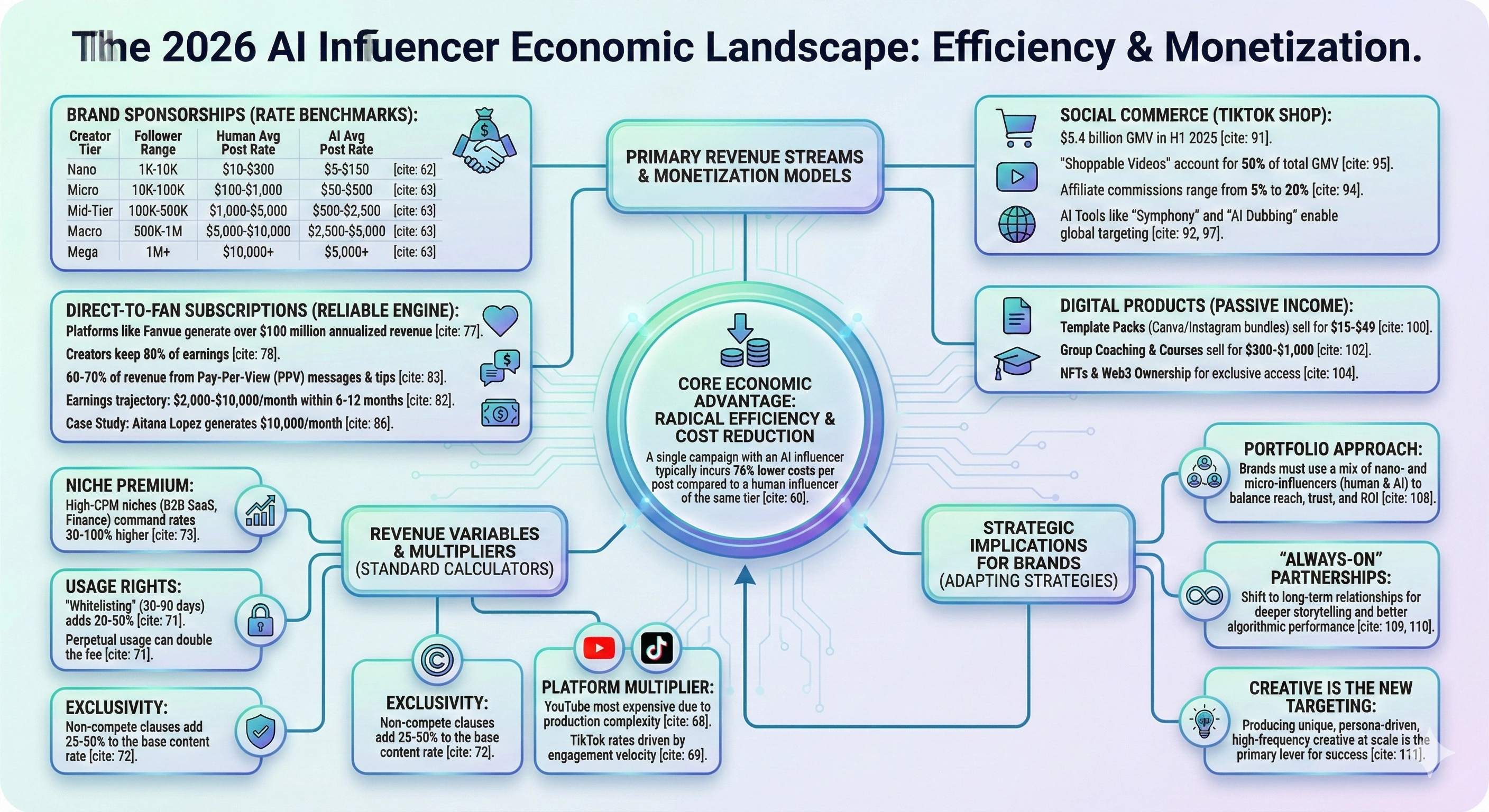
- Brand partnership spend on virtual influencers exceeds $1 billion annually
- Audience acceptance has grown dramatically, particularly among younger demographics
- Production quality has reached near-photorealistic levels
Current Limitations
Despite progress, significant limitations remain:
- Static or limited animation capabilities for most virtual influencers
- Obvious artificiality that some audiences find off-putting
- Limited real-time interaction capabilities
- Scalability challenges in content production
- Dependency on behind-the-scenes human teams for personality and engagement
The trends shaping the future address many of these limitations while opening entirely new possibilities.
Trend 1: Real-Time AI Interaction
Perhaps the most transformative near-term development is the emergence of AI-powered real-time interaction.
Current State
Today, most virtual influencer engagement is asynchronous—content is created, posted, and responses are written by human operators. This limits both the volume and authenticity of interaction.
Emerging Capabilities
Large language models (LLMs) are rapidly becoming capable of maintaining consistent personas at conversational speed:
Text-Based Interaction: AI systems can now maintain character voices and personalities across extended text conversations, enabling virtual influencers to engage with followers in real-time.
Voice Synthesis: Real-time voice synthesis allows virtual influencers to "speak" in distinctive voices, enabling voice notes, live audio, and even phone interactions.
Live Streaming: The convergence of real-time language models, voice synthesis, and animation opens the possibility of live streaming with AI-generated hosts.
Implications
Real-time interaction capabilities transform virtual influencers from content creators into genuine personalities with whom audiences can develop relationships. This elevates the potential intimacy and loyalty of virtual influencer audiences while raising new questions about the nature of parasocial relationships.
Trend 2: Hyper-Realistic Visual Generation
Visual quality continues to advance rapidly.
Current State
Current AI image generation produces impressive results but still shows telltale signs of artificiality upon close inspection—particularly in hands, accessories, text, and fine details.
Emerging Capabilities
Photorealism: The gap between AI-generated and photographed images continues to close. Within 2-3 years, distinguishing will become increasingly difficult for casual viewers.
Consistency Improvement: Better tools for maintaining character consistency across generations reduce one of the biggest challenges for virtual influencer operators.
Real-Time Generation: As generation speed increases, near-real-time image creation becomes possible, enabling more responsive content.
Video Generation: Text-to-video and image-to-video capabilities are advancing rapidly, promising fully animated virtual influencers.
Implications
Hyper-realistic visuals blur the line between virtual and human influencers further. This raises both creative possibilities and ethical questions about disclosure and transparency.
Trend 3: Multi-Modal AI Personas
Future virtual influencers will operate seamlessly across text, image, audio, and video modalities.
Current State
Today, virtual influencers typically excel in one mode (usually static images) with other modes handled less consistently or not at all.
Emerging Capabilities
Integrated Systems: AI systems that combine image generation, language models, voice synthesis, and animation under coherent persona control.
Cross-Platform Consistency: Unified personas that maintain consistency whether producing Instagram posts, TikTok videos, Twitter responses, or Twitch streams.
Omnichannel Presence: Virtual influencers present across all major platforms with content optimized for each while maintaining core identity.
Implications
Multi-modal virtual influencers can be everywhere their audiences are, in formats optimized for each context. This amplifies reach and engagement potential while increasing operational complexity.
Trend 4: Personalized and Interactive Experiences
Virtual influencers will increasingly offer personalized experiences.
Current State
Today, virtual influencer content is primarily one-to-many—the same content goes to all followers.
Emerging Capabilities
Personalized Content: AI-generated content tailored to individual followers based on their preferences and interactions.
Interactive Narratives: Story experiences where audience choices affect character development and content direction.
Virtual Companions: Private AI companions that maintain ongoing relationships with individual users.
Custom Content Generation: On-demand generation of personalized content for paying supporters.
Implications
Personalization transforms the virtual influencer relationship from audience member to something more intimate. This creates monetization opportunities while raising questions about emotional dependencies on AI entities.
Trend 5: Virtual Influencer Ecosystems
Standalone virtual influencers will give way to interconnected ecosystems.
Current State
Most virtual influencers operate as individual entities, occasionally collaborating but generally independent.
Emerging Capabilities
Shared Universes: Collections of virtual influencers inhabiting shared fictional worlds with interrelated storylines.
Inter-Character Dynamics: AI-driven relationships between virtual influencers that develop organically.
Community Integration: Virtual influencers that integrate with community members as characters in ongoing narratives.
Cross-Platform Narratives: Stories that unfold across multiple platforms and media types.
Implications
Ecosystem approaches create deeper engagement through interconnected storytelling and community involvement. They also enable operators to leverage investment in world-building across multiple characters.
Trend 6: Embodied Virtual Influencers
Virtual influencers will manifest in physical space through various technologies.
Current State
Virtual influencers exist entirely in digital space, with physical presence limited to merchandise and printed materials.
Emerging Capabilities
Augmented Reality: Virtual influencers appearing in physical spaces through AR glasses and phones.
Holographic Displays: Public appearances at events and venues through holographic projection.
Robotic Embodiment: Physical robotic representations of virtual influencers for special appearances.
Virtual Reality Presence: Full-presence meetings and experiences in VR environments.
Implications
Physical presence bridges the gap between digital and real-world influence. Virtual influencers could appear at events, host experiences, and interact with fans in embodied ways.
Trend 7: Regulatory Evolution
The regulatory environment around virtual influencers will mature.
Current State
Regulation of virtual influencers is currently inconsistent and developing. Different jurisdictions apply different standards.
Emerging Developments
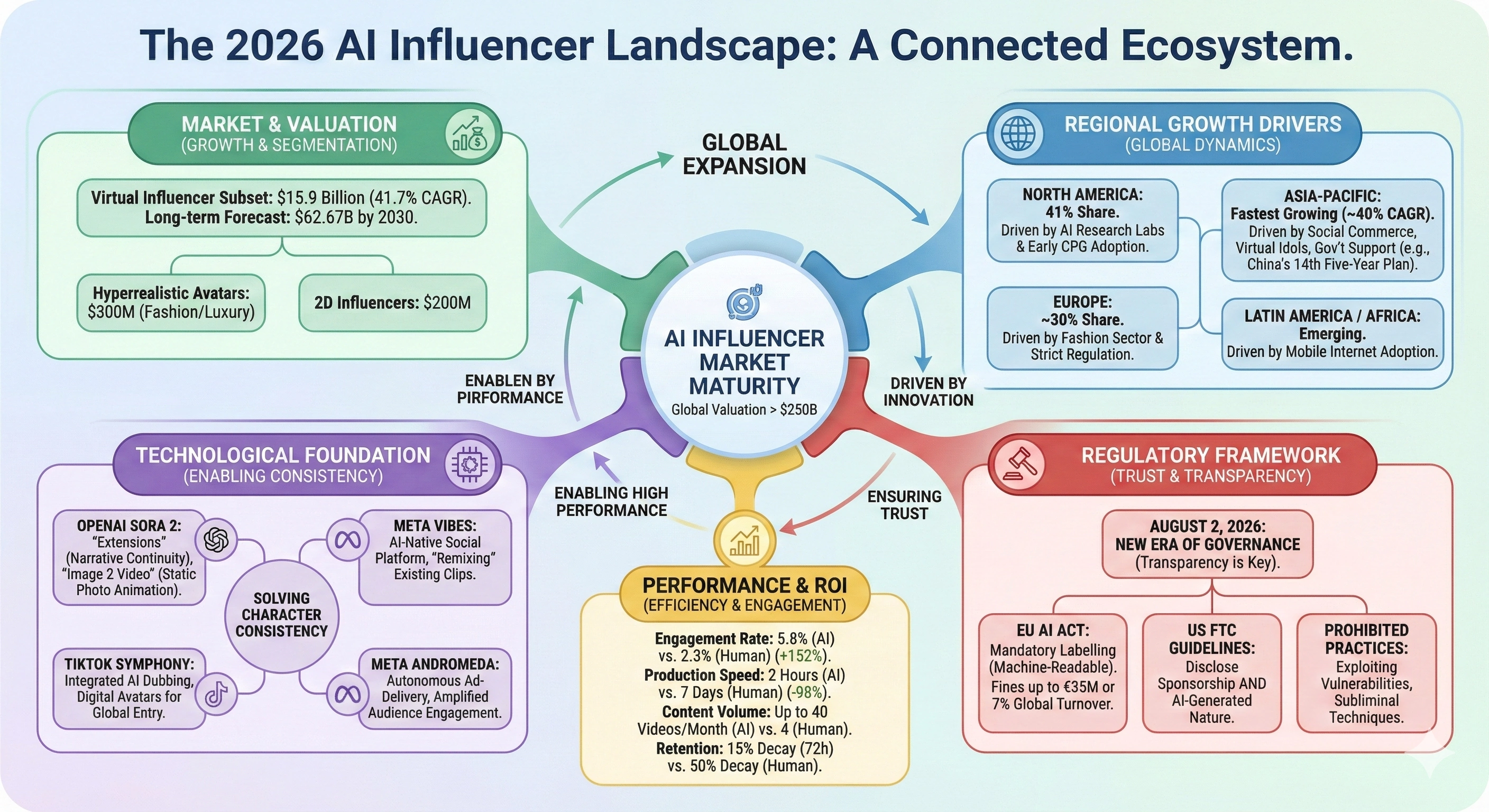
Disclosure Requirements: Clear requirements to identify AI-generated content and virtual influencer status.
Advertising Standards: Specific rules for virtual influencer brand partnerships and endorsements.
Creation Guidelines: Standards for responsible creation practices, particularly regarding likeness and consent.
Platform Policies: Evolving platform rules about AI-generated content and synthetic media.
Implications
Clearer regulation will legitimize the virtual influencer industry while requiring operators to adapt to compliance requirements. Proactive transparency may become a competitive advantage.
Trend 8: Democratization of Creation
Virtual influencer creation will become more accessible.
Current State
Creating high-quality virtual influencers currently requires significant technical expertise and often considerable investment.
Emerging Capabilities
No-Code Tools: Platforms enabling virtual influencer creation without technical skills.
Affordable Options: Lower-cost pathways to quality virtual character development.
Template Approaches: Starting points and customization tools for quick launches.
Community Resources: Shared knowledge and resources lowering barriers to entry.
Implications
Democratization will dramatically increase the number of virtual influencers, intensifying competition while diversifying representation. Differentiation will become more important as creation becomes easier.
Trend 9: Integration with Commerce
Virtual influencers will become more directly integrated with commerce.
Current State
Virtual influencers currently drive commerce primarily through traditional sponsored content and affiliate marketing.
Emerging Capabilities
Virtual Shopping Assistants: AI characters guiding shoppers through purchase decisions.
Live Commerce Integration: Virtual influencers hosting live shopping events.
Brand Mascot Evolution: Product mascots with full influencer capabilities.
Virtual Sales Representatives: AI characters handling direct customer engagement.
Implications
Deeper commerce integration creates new monetization models while potentially increasing concerns about manipulation and disclosure.
Trend 10: Cultural and Ethical Evolution
Cultural attitudes and ethical frameworks will continue evolving.
Current Considerations
As virtual influencers become more sophisticated and ubiquitous, society will grapple with various questions:
Authenticity: What does authenticity mean when interacting with AI entities?
Emotional Impact: What are the psychological effects of synthetic relationships?
Labor Displacement: How do virtual influencers affect human creator opportunities?
Representation: How should diversity and representation standards apply to AI characters?
Consent and Likeness: What rules should govern AI-generated human likenesses?
Emerging Frameworks
Expect the development of:
- Industry self-regulation and best practices
- Academic research on psychological and social impacts
- Legal frameworks for AI-generated content
- Cultural norms around virtual influencer engagement
Implications for Today's Creators
Understanding these trends has practical implications for those working with virtual influencers today.
Strategic Positioning
Invest in Character Depth: Characters with more developed personalities and backstories will be better positioned for real-time interaction capabilities.
Build Flexible Systems: Technical infrastructure should anticipate multi-modal and interactive capabilities.
Establish Authentic Communities: Strong community relationships will remain valuable regardless of technological changes.
Maintain Ethical Standards: High ethical standards position you well for increasing regulation and scrutiny.
Tactical Preparation
Experiment with Emerging Technologies: Test new capabilities as they become available.
Monitor Regulatory Developments: Stay informed about emerging requirements.
Develop Multi-Platform Presence: Establish presence across platforms to leverage omnichannel capabilities.
Document and Systematize: Clear documentation enables adaptation to new technologies.
Conclusion
The future of virtual influencers promises extraordinary evolution—from static images to fully interactive, multi-modal AI personalities capable of genuine engagement across platforms and even in physical space. These developments will amplify both the opportunities and the responsibilities associated with virtual influencer creation and management.
At PlayBella, we're actively preparing for this future while delivering exceptional value in the present. Our family of AI creators represents the current state of the art while our development roadmap anticipates the capabilities explored in this article.
The virtual influencer industry is young, and its most transformative moments lie ahead. Those who understand the trajectory and position themselves accordingly will be best prepared to thrive as the future unfolds.
Discover how PlayBella is pioneering the future of virtual influencers through our family of AI creators.
PlayBella Team
Published on January 15, 2026