How to Create a Successful AI Character: The Complete Guide
Creating an AI character that resonates with audiences requires more than just good visuals. Discover the complete process from concept to launch.
Creating an AI character that captivates audiences and builds a loyal following is both an art and a science. While the technology for generating stunning AI imagery has become increasingly accessible, the strategic thinking behind successful AI characters remains a specialized skill that separates viral sensations from forgotten experiments.
This comprehensive guide walks you through every step of the process—from initial concept development to launch execution—drawing on the expertise we've developed at PlayBella in creating our family of successful AI creators.
Understanding What Makes AI Characters Compelling
Before diving into the technical aspects of AI character creation, it's essential to understand what makes virtual influencers successful in the first place. The most engaging AI characters share several key characteristics:
Authenticity Within Fiction
This might seem paradoxical—how can something artificial be authentic? But audiences don't expect AI characters to be human. They expect them to be compelling, consistent, and emotionally resonant within their own fictional context.
The most successful AI characters acknowledge their artificial nature while still offering genuine value—whether through aesthetic beauty, entertaining content, aspirational lifestyles, or meaningful perspectives. They're not trying to fool anyone; they're offering a new kind of creative expression.
Visual Distinctiveness
In the crowded creator landscape, standing out visually is essential. The best AI characters have instantly recognizable aesthetics that differentiate them from both human creators and other AI personas. This might be a distinctive color palette, a unique styling approach, or signature visual elements that appear across their content.
Narrative Depth
While not every AI character needs an elaborate backstory, the most engaging ones have narrative depth that unfolds over time. This might include:
- A personality that evolves and reveals new facets
- Relationships with other characters or brand entities
- Storylines that progress across content
- Reactions to real-world events that feel genuine to the character
Consistent Voice
Just as visual aesthetics must be consistent, so must the character's voice—how they communicate, what opinions they express, what language they use. This consistency builds trust and recognition with audiences.
Phase 1: Concept Development
The foundation of any successful AI character is a well-developed concept. This phase is about making strategic decisions that will guide all subsequent creative choices.
Define Your Niche and Audience
Start by answering fundamental questions:
- Who is your target audience? (Demographics, interests, platforms they use)
- What niche will your character occupy? (Fashion, beauty, lifestyle, art, gaming, etc.)
- What value will your character provide? (Entertainment, inspiration, education, escapism)
- What emotional response do you want to evoke?
Be specific here. "Young people interested in fashion" is too broad. "Gen Z fashion enthusiasts who value sustainability and streetwear aesthetics, primarily on Instagram and TikTok" gives you something to work with.
Develop Character Fundamentals
With your audience defined, develop the core elements of your character:
Personality Traits: Choose 3-5 defining personality characteristics. Are they bold or subtle? Playful or serious? Confident or vulnerable? These traits will inform everything from visual design to content tone.
Background Story: Even if you never explicitly share it, develop a backstory. Where does this character "come from"? What experiences have shaped them? What motivates them? This internal consistency makes the character feel more real.
Values and Perspectives: What does your character care about? What opinions would they express on relevant topics? These values should align with your target audience's sensibilities while remaining authentic to the character.
Aesthetic Direction: Begin defining the visual direction. What color palette fits the character? What styling choices reflect their personality? What environments do they inhabit?
Create a Character Bible
Document everything in a character bible—a comprehensive reference document that ensures consistency across all content creation. This should include:
- Character name and any nicknames
- Detailed personality description
- Background story elements
- Visual reference materials
- Voice and communication guidelines
- Topics the character would and wouldn't discuss
- Relationship dynamics with other characters or entities
Phase 2: Visual Design and Generation
With your concept solidified, it's time to bring your character to life visually. This is where technology meets artistry.
Choosing Your Technology Stack
Several AI image generation technologies can create compelling character visuals:
Stable Diffusion: Highly customizable with extensive community models and training capabilities. Ideal for creators who want maximum control.
Midjourney: Known for artistic quality and distinctive aesthetic. Easier to use but less customizable.
Custom-Trained Models: For truly unique characters, training custom models on specific aesthetic styles or character references provides the highest consistency and distinctiveness.
Establishing Visual Consistency
The biggest challenge in AI character creation is maintaining visual consistency across images. Your character must be recognizable from post to post. Strategies include:
Detailed Prompting: Develop standardized prompt templates that include specific details about facial features, body type, styling elements, and other distinguishing characteristics.
Reference Images: Use consistent reference images in your generation workflow to anchor the character's appearance.
Custom Training: Train LoRA (Low-Rank Adaptation) models or other fine-tuning approaches on your established character appearance.
Seed Management: Document and reuse seed values that produce favorable results.
Post-Processing Consistency: Develop consistent editing workflows that maintain the character's look across varying generation outputs.
Building a Visual Asset Library
Create a library of validated images that can serve as references and component sources:
- Multiple facial expressions and angles
- Various pose options
- Different outfit configurations
- Environment and setting variations
- Signature styling elements
This library becomes the foundation for efficient, consistent content creation.
Quality Standards
Establish and maintain high quality standards:
- Resolution requirements for different platforms
- Acceptable variation ranges for character features
- Guidelines for lighting and color grading
- Standards for background and environment quality
Phase 3: Content Strategy Development
Visual assets alone don't make a successful AI character. You need a comprehensive content strategy that builds audience and engagement.
Platform Selection
Different platforms serve different purposes:
Instagram: Ideal for high-quality imagery, aesthetic content, and brand partnerships. Strong for building aspirational personas.
TikTok: Best for trending content, personality-driven videos, and reaching younger audiences. Requires more dynamic content approaches.
Twitter/X: Good for personality expression, engagement, and community building. Less visual-focused.
OnlyFans/Subscription Platforms: For more exclusive, premium content and direct monetization.
Select platforms based on where your target audience spends time and what content formats best suit your character's strengths.
Content Pillars
Define 3-5 content pillars that will structure your output:
For a fashion-focused AI character, these might be:
- Outfit showcases and styling inspiration
- Behind-the-scenes/creative process content
- Trend commentary and opinions
- Lifestyle and aspirational content
- Community interaction and engagement
Each post should clearly align with one of these pillars while maintaining overall brand consistency.
Posting Cadence
Establish a sustainable posting schedule:
- Determine optimal posting times for your audience
- Balance quantity with quality
- Build in flexibility for trending moments
- Plan content themes in advance while allowing for spontaneity
Engagement Strategy
AI characters can and should engage with their audiences. Define:
- How the character responds to comments and messages
- What topics they engage on
- How they interact with other creators (human or AI)
- Community building initiatives they might lead
Phase 4: Launch and Growth
With your character developed and content strategy in place, it's time to launch.
Soft Launch vs. Hard Launch
Soft Launch: Begin posting without major announcement. Build initial content library, test audience response, refine approach before major push.
Hard Launch: Coordinate major announcement across platforms. Works better when you have existing audiences to leverage or partnership support.
Most AI characters benefit from soft launches that allow for iteration before broader exposure.
Initial Audience Building
Early audience building strategies include:
- Hashtag optimization: Research and use relevant hashtags that your target audience follows
- Community engagement: Actively engage in communities related to your niche
- Collaboration: Partner with established creators (human or AI) to access their audiences
- Trend participation: Create content around trending topics and formats
- Paid promotion: Strategic advertising to reach target demographics
Measuring Success
Establish KPIs (Key Performance Indicators) from the start:
- Follower growth rate
- Engagement rate (likes, comments, shares)
- Content performance by type
- Audience demographics
- Sentiment analysis
- Brand inquiry rate (if targeting partnerships)
Regular analysis of these metrics informs strategy optimization.
Phase 5: Monetization and Sustainability
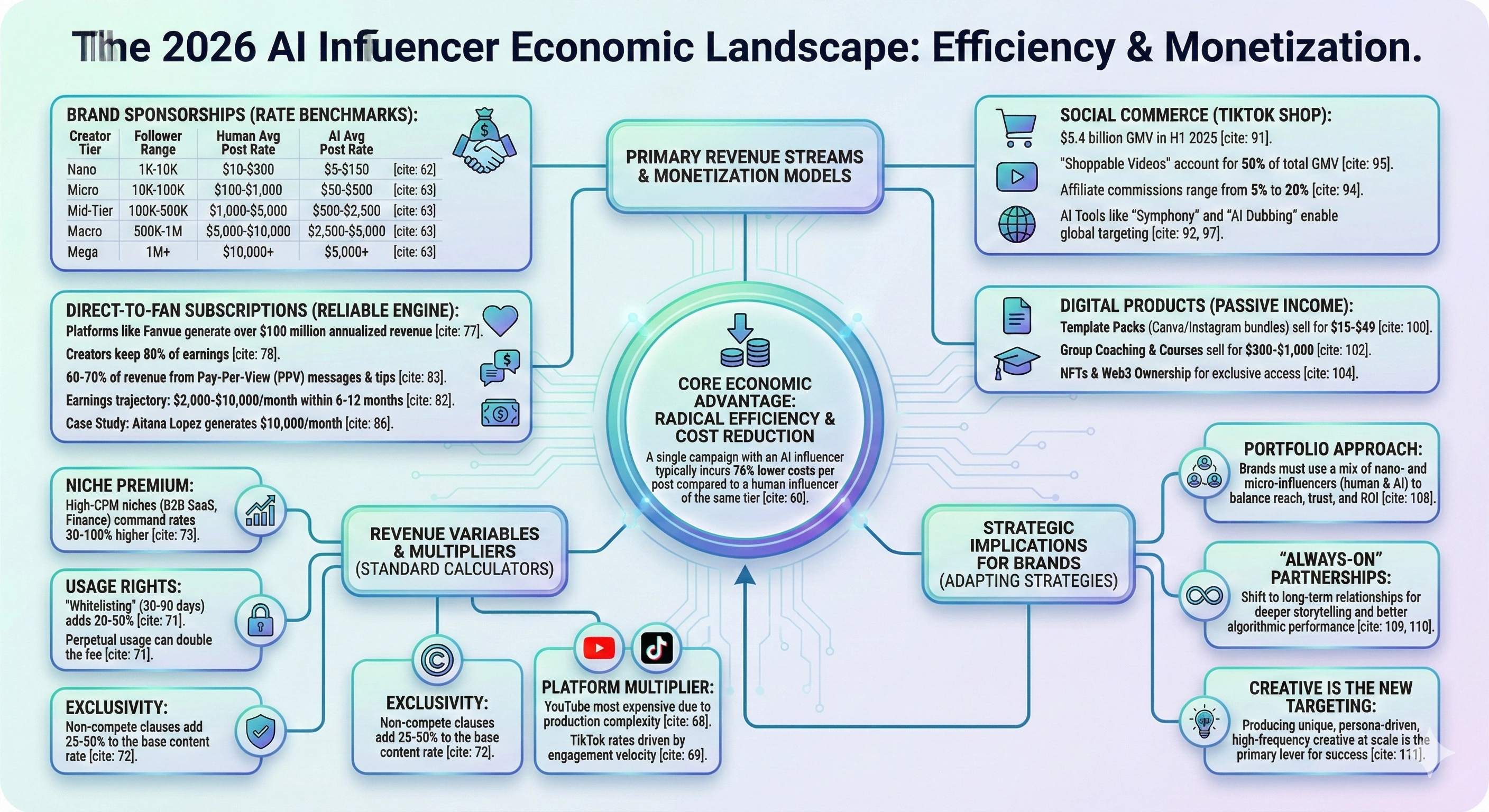
Successful AI characters can generate significant revenue through multiple channels.
Brand Partnerships
The primary monetization path for many AI influencers. To attract brand deals:
- Build substantial, engaged followings
- Develop professional media kits and rate cards
- Demonstrate brand safety and consistency
- Create case studies from successful partnerships
- Consider agency representation
Direct Monetization
Beyond brand deals:
- Subscription content: Exclusive content for paying subscribers
- Digital products: Art prints, wallpapers, presets based on your character
- Merchandise: Physical products featuring your character
- Licensing: Licensing your character for other uses
Long-Term Sustainability
Building a sustainable AI character operation requires:
- Documentation of all creative processes and guidelines
- Building a team as the operation grows
- Diversifying revenue streams
- Planning for character evolution and growth
- Creating systems that don't depend entirely on manual effort
Common Pitfalls to Avoid
Learn from the mistakes of failed AI character ventures:
Inconsistency
The fastest way to lose audience trust is visual or personality inconsistency. Invest in systems that maintain consistency.
Over-Commercialization
Audiences accept sponsored content but reject characters that feel purely transactional. Maintain authentic content alongside commercial opportunities.
Neglecting Engagement
AI characters that never respond or engage feel hollow. Build engagement strategies that make audiences feel connected.
Trend Chasing
While trend participation is valuable, characters that lack core identity and just chase trends lack staying power. Balance trend relevance with authentic identity.
Ignoring Feedback
Pay attention to what your audience responds to. The most successful creators evolve based on audience feedback while maintaining core identity.
Conclusion
Creating a successful AI character requires the intersection of creative vision, technical capability, strategic thinking, and consistent execution. While the technology continues to evolve and improve, the fundamentals of compelling character development remain constant.
At PlayBella, we've invested years in perfecting this process across our family of AI creators. Each of our collections—from the provocative Bold to the elegant Prestige—represents the culmination of these principles applied with creative excellence.
Whether you're launching your first AI character or looking to improve an existing presence, the principles in this guide provide a framework for success. The creator economy continues to evolve, and AI characters are positioned to play an increasingly central role in that evolution.
Discover how PlayBella is pioneering the future of AI creators. Explore our family of collections and see these principles in action.
PlayBella Team
Published on January 28, 2026