Monetizing Your AI Creator: Revenue Streams and Business Models
Transform your AI creator from passion project to profit center. Discover proven monetization strategies that generate real revenue.
Creating an AI influencer or character is only the beginning. The real challenge—and opportunity—lies in building sustainable revenue streams that transform your creative project into a profitable business. This comprehensive guide explores the diverse monetization options available to AI creator operators, with practical strategies for each.
Understanding the AI Creator Business Model
Before diving into specific revenue streams, it's important to understand how AI creator businesses differ from traditional influencer models.
Key Differences
Lower Variable Costs: Once you've invested in developing your character and production systems, creating additional content has relatively low marginal cost. This enables volume-based strategies.
IP Ownership: Unlike human influencers who own their likeness, AI creator operators own valuable intellectual property that can be leveraged across multiple channels and products.
Scalability: AI creators can theoretically be present across unlimited platforms and content simultaneously, enabling scale that's impossible for human creators.
Operational Complexity: Managing an AI creator requires different skills than being a human influencer—technical capability, strategic thinking, and operational consistency are paramount.
Business Model Options
Different operators choose different business model focuses:
Content-First: Primary focus on building audience and engagement, monetizing through advertising and brand partnerships.
Commerce-First: Using the character primarily to drive product sales, with content serving commercial objectives.
Platform/Service: Building tools, services, or platforms around AI creator capabilities.
Hybrid: Combining multiple approaches for diversified revenue.
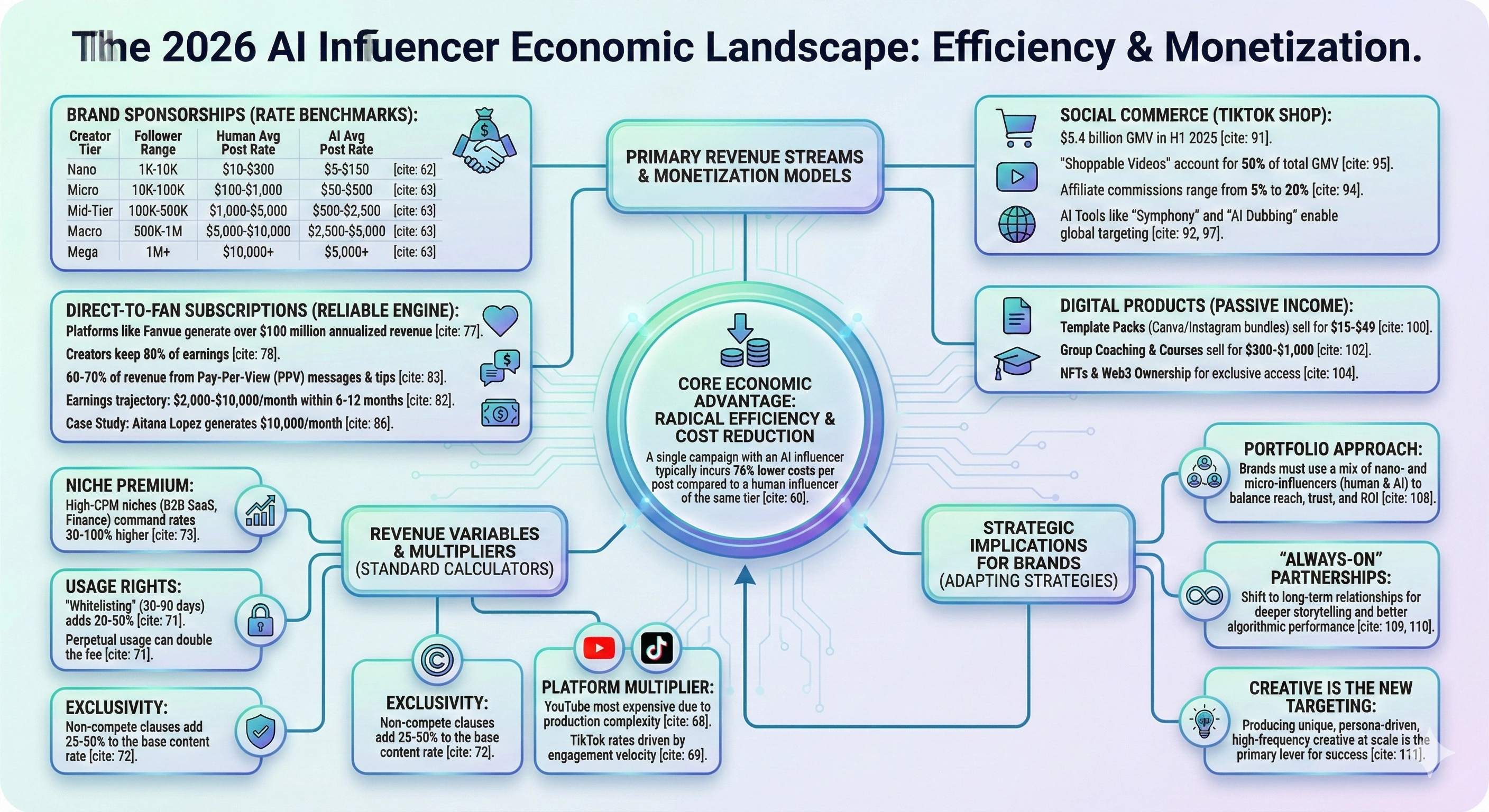
Primary Revenue Streams
1. Brand Partnerships and Sponsorships
Brand deals represent the most significant revenue opportunity for most AI creators with substantial followings.
Types of Brand Deals
Sponsored Posts: Individual pieces of content created for brand partners. These can range from single images to full content series.
Ambassadorships: Ongoing relationships where your AI creator represents a brand over an extended period. These typically include exclusivity provisions and more substantial compensation.
Licensing Agreements: Granting brands rights to use your character in their own marketing materials. This can be particularly lucrative as it allows the character to appear in high-production-value advertising.
Product Collaborations: Developing products in partnership with brands—limited edition items featuring your character, co-branded products, or exclusive collections.
Pricing Strategies
Pricing for AI influencer partnerships depends on several factors:
- Follower count and engagement rates
- Audience demographics and purchasing power
- Content production complexity
- Exclusivity requirements
- Usage rights granted
As a benchmark, AI influencers with 100K+ followers typically command $1,000-$5,000 per sponsored post, with top-tier AI influencers earning $10,000-$50,000+ for major campaigns.
Landing Brand Deals
To attract brand partnerships:
- Develop a professional media kit with audience demographics, engagement metrics, and case studies
- Reach out proactively to brands that align with your character's aesthetic and audience
- Work with influencer marketing platforms and agencies
- Showcase previous successful partnerships
- Make yourself easy to work with—professionalism matters
2. Direct Fan Monetization
Direct monetization from fans provides predictable, recurring revenue less dependent on brand deals.
Subscription Platforms
Patreon/Ko-fi: Offer tiered memberships with escalating benefits. Common tiers include:
- Basic supporter access
- Exclusive content access
- Behind-the-scenes materials
- Direct interaction opportunities
- Custom content requests
OnlyFans/Fansly: For creators whose content suits these platforms, subscription models can generate significant revenue. AI creators on these platforms typically offer more exclusive, intimate content not available on mainstream social platforms.
Platform-Native Subscriptions: Instagram Subscriptions, YouTube Memberships, and similar tools allow direct fan support without leaving platforms.
Pricing Considerations
Subscription pricing varies widely:
- Mass-market content: $5-15/month
- Premium/exclusive content: $15-50/month
- Ultra-exclusive tiers: $50-200+/month
Test different price points and tier structures to optimize revenue while maintaining subscriber growth.
3. Digital Products and Content Sales
AI characters create valuable digital assets that can be sold directly.
Product Types
Art Prints and Wallpapers: High-resolution images suitable for printing or digital display. Can be sold as one-time purchases or offered in bundles.
Photo Sets and Galleries: Collections of themed images sold as digital downloads.
Custom Content: Personalized content created according to purchaser specifications.
Presets and Filters: For AI creators with distinctive aesthetics, selling the tools to recreate aspects of that aesthetic can be lucrative.
NFTs and Digital Collectibles: While the NFT market has cooled from its peak, there remains a market for digital collectibles from popular characters.
4. Physical Merchandise
Physical products featuring your AI creator can generate additional revenue while extending brand presence.
Common Merchandise Categories
Apparel: T-shirts, hoodies, and clothing featuring character imagery.
Accessories: Phone cases, bags, jewelry, and similar items.
Posters and Art Prints: Physical prints of digital artwork.
Collectibles: Figurines, statues, or other collectible items featuring the character.
Production Approaches
Print-on-Demand: Low risk, lower margins. Use services like Printful, Redbubble, or Teespring to create products that are only manufactured when ordered.
Inventory Production: Higher risk, better margins. Order product inventory upfront for lower per-unit costs.
Collaborations: Partner with established merchandise brands who handle production and distribution for a revenue share.
5. Licensing and IP Monetization
Your AI character represents intellectual property that can be licensed for various uses.
Licensing Opportunities
Media Rights: Licensing your character for appearance in games, animations, or other media.
Commercial Rights: Allowing businesses to use your character for their marketing purposes.
Merchandise Licensing: Granting rights to product manufacturers to create merchandise featuring your character.
Platform Features: Some platforms pay for character appearances or features.
Licensing Considerations
When licensing your character:
- Define usage scope clearly (channels, duration, geography)
- Retain approval rights over how the character is portrayed
- Consider exclusivity carefully—it increases value but limits other opportunities
- Price based on usage scope and partner size
- Protect your IP with proper legal documentation
Secondary Revenue Streams
6. Affiliate Marketing
Recommending products and earning commissions on resulting sales can provide steady secondary income.
Product Recommendations: When your AI character "uses" or recommends products, include affiliate links.
Curated Collections: Create shoppable collections featuring products that fit your character's aesthetic.
Platform Partnerships: Some platforms offer attractive affiliate terms for creator referrals.
7. Platform Monetization
Platforms increasingly offer direct creator monetization:
Ad Revenue Sharing: YouTube, TikTok, and other platforms share advertising revenue with creators meeting certain thresholds.
Creator Funds: Platform-specific funds that pay creators based on content performance.
Tipping and Gifts: Live streaming platforms allow viewers to send monetary gifts.
8. Consulting and Services
Expertise developed in creating AI characters can itself become a revenue source:
Consulting: Advising brands or individuals on AI creator strategy.
Character Development Services: Creating AI characters for clients.
Training and Courses: Teaching others to create and manage AI characters.
Building Sustainable Revenue
Maximizing total revenue requires thoughtful strategy across all streams.
Revenue Diversification
Avoid over-reliance on any single revenue stream:
- Brand deals can be inconsistent
- Platform monetization depends on algorithm favor
- Single products may have limited life cycles
Successful operators typically build revenue across multiple categories.
Audience Development Investment
Revenue ultimately derives from audience. Continuous investment in audience growth and engagement supports all revenue streams.
Lifetime Value Optimization
Consider the full lifetime value of audience relationships:
- Lower prices initially to build audience
- Develop premium offerings for engaged fans
- Create upgrade paths from free to paid engagement
Operational Efficiency
As operations scale, efficiency becomes crucial:
- Develop repeatable production processes
- Invest in tools that reduce per-content costs
- Build teams or partnerships for specialized functions
Case Study: Revenue Structure of a Successful AI Creator
Here's a representative breakdown of monthly revenue for an established AI creator with 500K followers:
| Revenue Source | Monthly Revenue | % of Total |
|---|---|---|
| Brand Partnerships | $15,000 | 42% |
| Subscriptions (Patreon/OnlyFans) | $8,000 | 22% |
| Digital Products | $4,000 | 11% |
| Merchandise | $3,000 | 8% |
| Affiliate Revenue | $2,500 | 7% |
| Platform Revenue (Ads/Gifts) | $2,000 | 6% |
| Licensing | $1,500 | 4% |
| Total | $36,000 | 100% |
This diversified structure provides stability while leaving room for growth in any category.
Legal and Tax Considerations
Monetizing an AI creator creates business obligations.
Business Structure
Consider:
- Forming an LLC or corporation for liability protection
- Separating personal and business finances
- Proper contract structures for partnerships
- Insurance appropriate for your operations
Tax Obligations
Work with professionals to ensure:
- Proper income reporting across all revenue sources
- Expense documentation and deductions
- Sales tax collection where required
- International income considerations
Intellectual Property Protection
Protect your valuable IP:
- Trademark your character name and key visual elements
- Copyright original content
- Document creation processes for ownership clarity
- Monitor for unauthorized use
Conclusion
Monetizing an AI creator is a multifaceted business challenge that rewards strategic thinking and consistent execution. The most successful operators develop diversified revenue across multiple streams while continuously investing in the audience relationships that ultimately support all monetization.
At PlayBella, we've built sustainable business models around our family of AI creators. Each collection—from Bold to Prestige—represents not just creative achievement but also commercial viability, demonstrating what's possible when art meets business strategy.
Whether you're just beginning to monetize your AI creator or looking to optimize existing revenue streams, the principles in this guide provide a framework for building sustainable income from your digital content.
Interested in how PlayBella approaches AI creator monetization? Explore our collections and learn from the business models behind our success.
PlayBella Team
Published on January 22, 2026